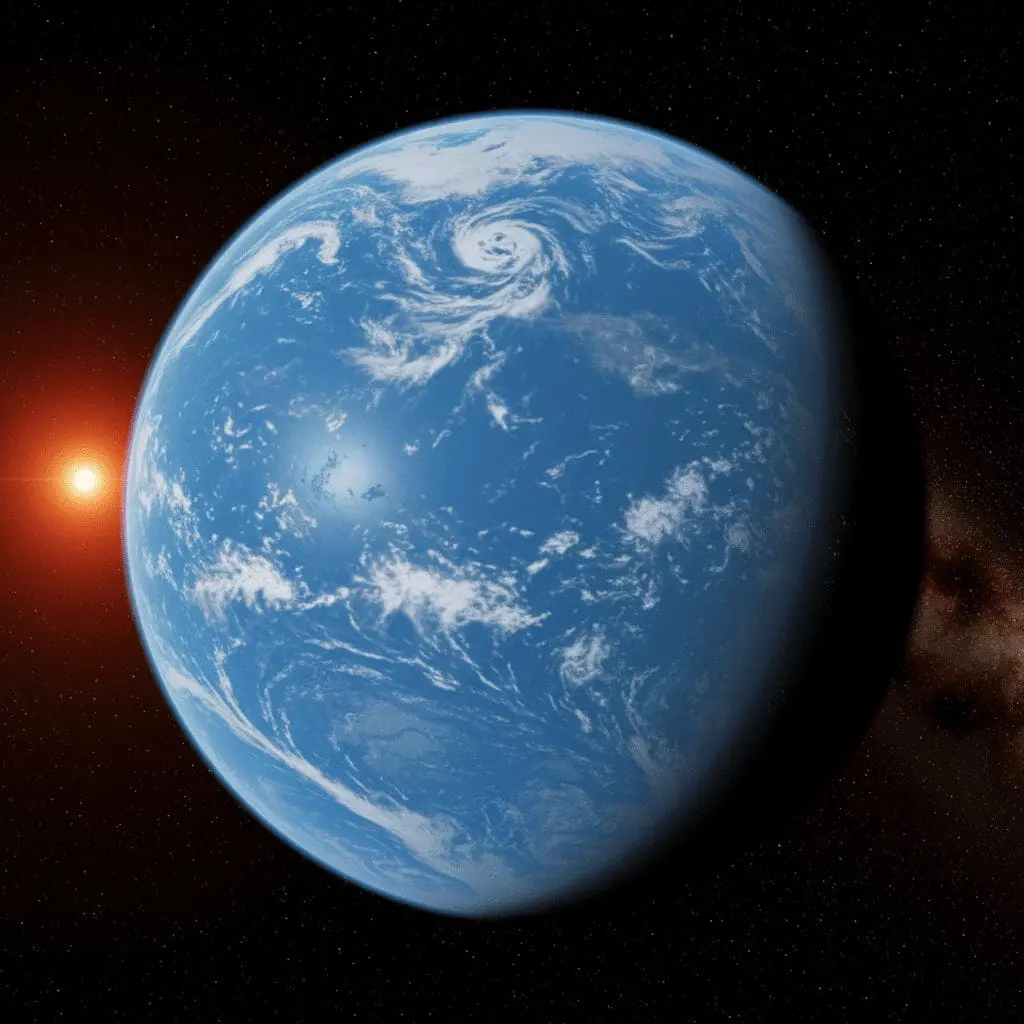
Most planets are not found because we see them shining on their own. They are found because something tiny looks wrong in the light of a star. That is why exoplanet detection technology now matters to anyone watching the next stage of astronomy, from NASA followers in Florida to backyard telescope fans in Arizona. The field is moving from “Did we find a planet?” toward “What kind of world is it, how heavy is it, and could its air tell us anything useful?” NASA’s catalog now lists more than 6,000 confirmed worlds, and the count keeps changing as teams check new signals against older data. For readers following science and technology coverage, the big story is not one telescope beating another. It is the handoff. Space based observatories catch faint dips and clean infrared signals. Ground based observatories bring giant mirrors, repeat visits, and sharper follow-up. Together, they are turning planet hunting into planet understanding.
Why Exoplanet Detection Technology Is Moving Past Simple Planet Counts
The first thrill was the count. One planet, then a few, then hundreds, then thousands. That phase mattered, but it also trained the public to watch the scoreboard instead of the craft. The better question now is not how many worlds exist. It is how confident we are, what else we can learn, and whether several tools agree.
Why tiny signals need more than one witness
A planet crossing in front of a star can dim that star by a small amount. That is the transit method, and it works because space telescopes can stare without clouds, daylight, or the shaking air above Earth. NASA describes transit spectroscopy as a way to read starlight after it passes through a planet’s air, which can reveal clues about what that air contains.
But a dip is not always a planet. A faint nearby star can blend into the same pixel. A binary star can fake the timing. Starspots can make the light curve messy. This is where patient follow-up wins. A telescope in space may find the first clue, while a team on Earth checks the star, measures its wobble, or rules out a false match.
That sounds slower than people expect. It is. Good science often moves like a careful mechanic, not a fireworks show. The strange part is that the delay makes the discovery stronger. A planet announced after several tests is more valuable than ten weak candidates passed around for clicks.
Why brighter nearby stars are changing the hunt
NASA’s TESS mission was built to search bright, nearby stars for transiting worlds, making many targets easier to study again from Earth. Its original survey focused on about 200,000 bright stars, including nearby red dwarfs. That design choice matters for Americans who read about discoveries and wonder why some planets get more attention than others.
A planet around a bright star is like a small object in a well-lit room. You still need skill to see it, but the follow-up is less punishing. Observatories in Hawaii, Arizona, Chile, and the Canary Islands can return to the same target and test the signal with better timing or finer color data.
There is a counterintuitive lesson here. The most useful planet is not always the most Earth-like one in the headline. Sometimes it is a hot, swollen world around a bright star because it gives astronomers a cleaner test case. That test case trains the tools that later go after smaller, cooler worlds.
How Space Based Observatories Find the First Clues
Space based observatories have one unfair advantage: they rise above Earth’s restless air. That does not make them magic. It means they can gather cleaner light for long stretches, and cleaner light is the raw material of planet hunting. The limit is not drama. The limit is measurement.
The transit method turns patience into evidence
The transit method works best when a planet’s orbit lines up with our view. When that happens, the planet passes across the star and blocks a thin slice of light. One dip is a hint. Repeated dips at the same interval start to look like a clock.
Kepler made this idea famous by staring at one star field for years. TESS widened the search by looking across much of the sky, with special value placed on nearby bright stars. In both cases, the logic is plain: watch long enough, keep the noise low, and the hidden rhythm begins to show.
The catch is geometry. Most planets do not cross their stars from our angle. That means the method misses many real worlds. Still, when it works, it gives radius, timing, and a path for future air studies. For readers building a topic cluster around deep space mission updates, that is the bridge between discovery news and long-term science value.
Webb, Roman, and the move from dots to details
The James Webb Space Telescope has pushed exoplanet work deeper into atmosphere studies, from hot giant planets to smaller rocky targets. NASA says Webb is studying a range of worlds and their atmospheres, helping scientists compare distant systems with our own.
The next shift is field of view and starlight control. NASA’s Roman Space Telescope is designed for wide infrared surveys and includes a coronagraph instrument that blocks starlight to test direct planet imaging methods. Recent reporting also notes Roman’s Florida launch preparation for a planned 2026 liftoff window, though mission dates can move.
Here is the part casual readers miss: direct imaging is not only about taking a “picture of a planet.” It is about separating a candle from a searchlight when both sit in the same line of sight. The picture is a measurement problem first. Beauty comes later.
Why Ground Based Observatories Still Do the Heavy Lifting
It is tempting to treat space telescopes as the heroes and Earth telescopes as backup. That view is wrong. Ground based observatories often provide the mass, orbit checks, and repeated monitoring that turn a possible planet into a physical world. Space may start the story. Earth often edits it.
Radial velocity gives planets their weight
A planet pulls on its star as it orbits. The star moves a little toward us and away from us, and that motion shifts the star’s light. Radial velocity tools read that shift. The result can reveal a planet’s mass, especially when paired with transit data.
This is where large ground telescopes earn their keep. A transit tells you how wide a planet is. Radial velocity helps tell you how heavy it is. Put those together and you can estimate density. A puffy gas world and a rocky world may have similar widths, but their weights tell different stories.
The non-obvious insight is that “bigger telescope” is not the whole answer. Stability matters. A spectrograph must hold its own behavior over time, because the signal can be small enough to hide inside tiny instrument shifts. In plain words, the machine has to know itself before it can know a planet.
Direct imaging from Earth needs clever correction
Earth’s atmosphere bends and blurs starlight. That sounds like a fatal flaw, but adaptive optics can correct much of the damage in real time. Mirrors flex. Computers respond. A star’s glare gets shaped and reduced until faint nearby light has a chance to appear.
ESO says the Extremely Large Telescope will improve radial velocity work and help detect direct light from planets, opening better paths to study rocky worlds and their atmospheres. That matters because a giant ground mirror can collect huge amounts of light. Light is still the currency.
A good example is the difference between a space snapshot and years of Earth-based follow-up. A space mission may mark a target. Then large observatories return again and again as the planet moves through its orbit. The first clue becomes a weathered case file, not a one-day headline.
What Better Detection Means for American Readers and Future Missions
The hunt now feels closer to daily life because the names are familiar: NASA, Webb, TESS, Roman, Hawaii observatories, Arizona mirror labs, university teams, public data tools. You do not need a PhD to understand the main shift. The work is becoming less about finding any planet and more about choosing the right planets for deeper study.
Public data makes the field less closed off
The NASA Exoplanet Archive gives researchers and the public a shared place to track confirmed planets, light curves, and survey data. It also lists huge TESS transit survey data sets, which helps explain why software, sorting, and follow-up choices now matter so much.
That creates a new kind of access. A student in Texas, a teacher in Ohio, or an amateur astronomy club in New Mexico can follow real targets instead of waiting for a magazine feature. The data may be hard, but it is not locked in a tower.
The surprise is that discovery can now begin after the telescope has stopped looking. Old data gets searched again with better models. A weak signal that once looked like noise may later stand out. Planet hunting has become an archive science as much as an observing science.
The next win is choosing targets with discipline
ESA’s Plato mission is planned to use 26 cameras to study terrestrial planets around bright stars, including worlds in orbits reaching toward habitable zones. It will also study tiny changes in host-star light to better describe those stars.
That host-star work may sound like a side note. It is not. If you do not know the star well, you do not know the planet well. A planet’s radius, temperature estimate, and likely environment all depend on the star’s size, brightness, and behavior.
For buyers and hobbyists reading a consumer telescope buying guide, this is a useful reality check. Home gear will not confirm another Earth. But public interest, school programs, and local observatory nights help keep support alive for the large instruments that can. Big science still needs public patience.
Conclusion
The next decade of planet hunting will reward careful teamwork more than loud claims. Space based observatories will keep finding clean signals above the atmosphere, while ground based observatories will keep testing those signals with mass checks, sharper imaging, and repeated visits. The best exoplanet detection technology will not be a single telescope or one famous mission. It will be a chain of instruments, data archives, engineers, software teams, and patient observers who know that a small dip in light can carry a large truth. For American readers, that makes the field worth following beyond the big announcement days. The real progress will show up in quieter updates: a better orbit, a tighter mass, a cleaner spectrum, a false alarm removed. That is how distant worlds become known worlds. Keep watching the measurements, not only the milestones.
Frequently Asked Questions
How do scientists detect planets outside our solar system?
They usually watch how a planet affects its star. A planet may dim the star during a transit, tug the star through gravity, or appear faintly beside it in direct imaging. Each method catches a different clue, so teams often combine them.
Is the transit method the best way to find distant planets?
It is one of the most productive methods, especially from space. It works only when the planet crosses the star from our viewpoint, so it misses many worlds. Its strength is clean timing, repeat signals, and useful planet-size estimates.
Why do astronomers need both ground and space telescopes?
Space telescopes avoid Earth’s air and often find the first signal. Earth telescopes can return often, use huge mirrors, and measure stellar motion with fine tools. Together, they reduce false alarms and reveal more about each planet.
Can telescopes take real pictures of exoplanets?
Yes, but it is hard. Stars are much brighter than planets, so instruments must block or shape the star’s light. Most direct images show large young planets far from their stars, not small Earth-like worlds.
What makes a confirmed exoplanet different from a candidate?
A candidate has a signal that may be caused by a planet. A confirmed planet has passed extra checks, such as repeat observations, false-positive tests, or mass measurements. Confirmation gives scientists more trust in the result.
Are any discovered exoplanets like Earth?
Some are close to Earth’s size or orbit in a zone where liquid water could be possible. That does not mean they are Earth twins. Scientists still need better data on mass, atmosphere, star activity, and surface conditions.
Will future observatories find signs of life?
They may search for gases linked to biology, but proof will be hard. A single gas can have more than one cause. Strong claims will need several lines of evidence from different instruments and repeated observations.
Why should everyday Americans care about exoplanet research?
It pushes better sensors, optics, data tools, and public science education. It also answers a deep human question in a practical way: are planets common, and how rare is a world like ours? That question belongs to everyone.