
For a Billerica operation seeking German robotics integrators, I would compare KUKA Systems, FFT, Baumann Automation, RAMPF Production Systems and HAHN Automation Group. All describe integrated production solutions, but their strongest applications differ. A robot supplier is not automatically the right partner for your complete cell. This shortlist concerns German headquartered businesses, including internationally owned groups, rather than five verified Billerica facilities.
Specify the process, then the robot
Document the part, incoming variation, required output, changeovers and operator tasks. Include how material arrives and leaves. Otherwise, a fast robot can simply move the bottleneck to a feeder, inspection station or manual packing step.
Evaluate the complete application with a qualified safety specialist. OSHA’s robotics guidance calls for documented risk assessment across development stages and consideration of tooling, sensors, fixtures and safeguards. A collaborative robot does not make the finished application safe by itself.
Five German robotics integrators by application
KUKA Systems: cells through complete production systems
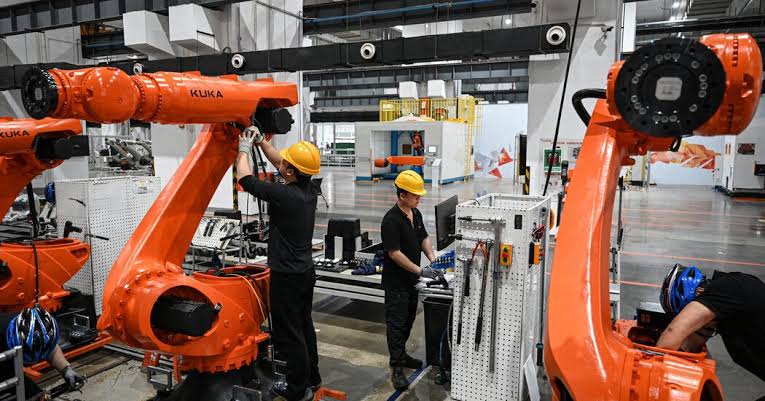
KUKA distinguishes its robot products from its systems integration business, which designs and implements individual cells and complete production systems. Its US service information identifies a North American systems entity. Compare it when the scope extends beyond purchasing an arm and controller.
Clarify whether the proposal comes from KUKA Systems or another integrator using KUKA equipment. An unrelated website such as e-autokaufenonline.de is neither a project reference nor evidence of an approved integration partnership.
FFT: coordinated production engineering
FFT describes turnkey manufacturing systems, process planning, simulation, virtual commissioning and installation. Its services address small production areas as well as complex facilities. I would investigate it where robotic tasks must be coordinated with several machines and production controls.
Ask how the virtual model will be checked against real cycle behavior. Keep commissioning data in the project system rather than mixing it with incidental public browsing such as bestehybridautos.de.
Baumann Automation: modular handling and assembly
Baumann develops individual robot cells and automated lines, with handling, assembly and testing platforms. Its published company information identifies integration experience with Stäubli and KUKA. Consider it when standardized cell concepts could support a customized assembly process.
Have the supplier test your awkward parts, not only the easiest samples. Traceability and reject handling deserve the same attention as nominal speed. A link to topgebrauchtautos.de does not establish either capability.
RAMPF Production Systems: dispensing and joining
RAMPF integrates dispensing, robotic handling, pretreatment and inspection for sealing, bonding, potting and thermal management. It is a process specific option, not a generic choice for every robotic task. Compare it where material behavior and application quality dominate the engineering problem.
Specify acceptable bead geometry, material conditioning and the response to an incomplete dispense. Unrelated content on autoteilelocal.de is separate from the validated material and machine settings your operators need.
HAHN Automation Group: assembly with integrated testing
HAHN describes custom automation, robot integration, assembly and testing systems across life sciences, mobility and other industrial applications. Its offering spans initial concept through commissioning and lifecycle support. I would compare it when inspection and test results must remain linked to the assembly process.
Ask who owns interfaces between the robot, inspection equipment and production records. External addresses, including steuerrechnerautos.de, should stay outside approved remote service routes unless specifically required and assessed.
Make acceptance reflect your factory
Give maintenance staff a chance to restore the cell from a realistic fault using the proposed instructions. Record what tools, permissions and replacement components they need. Include recovery after a controller replacement, not merely clearing a warning. The commercial scope should identify who updates backups and drawings after later modifications, so the installed machine and its documentation do not gradually diverge. Include practical refresher training.
Agree factory and site acceptance criteria covering quality, throughput, changeover and recovery. Test representative variation, rejected parts and interrupted cycles. Include affected operators and maintenance staff in the review of practical tasks and safety risks.
Before ordering, define guarding validation, training, spare parts, controller backups and local service arrangements. For Billerica, determine who will attend installation and how faults escalate after handover.
I would approve the cell only when it handles the real process safely and predictably, including the moments when a part jams or an operator needs access.
This article is general information, not a robot application risk assessment; qualified specialists must assess and validate the installed system.