
A prosthetic hand that can close is helpful. A leg that can push off the floor is better. But the real leap starts when the device stops acting like equipment strapped to the body and starts listening to the body. Bionic Limb Technology is now moving toward that line, with researchers building systems that read nerve signals, return touch or position feedback, and help users move with less constant visual checking. For U.S. patients, families, clinicians, and device buyers, the big question is not whether the science is exciting. It is whether these systems can become safe, trainable, repairable, and reachable outside elite labs. Recent work from MIT, Johns Hopkins APL, and Cleveland Clinic shows why the field feels closer than it did a decade ago, while medical technology reporting keeps reminding readers that a lab win is not the same thing as a clinic-ready option. MIT’s AMI work, for example, helped seven people walk more naturally by preserving muscle feedback pathways after amputation.
Why Bionic Limb Technology Is Moving From Tool to Body Partner
The old goal was simple on paper: replace the missing hand, arm, foot, or leg. That sounds fair until you watch someone live with the device. The user often has to stare at the prosthesis, plan each movement, correct each mistake, and accept that the device has no honest feel. The newer goal is harder. The limb must become part of a loop between brain, nerves, muscles, sensors, and motors.
Neural prosthetics are changing what “control” means
Traditional prosthetic limb control often depends on surface muscle signals. Electrodes sit on the skin and pick up electrical activity when nearby muscles contract. That can work, but it can also feel like speaking through a wall. Sweat, socket fit, skin movement, and muscle fatigue can blur the message.
Neural prosthetics try to bring the conversation closer to the source. Some systems reroute nerves into remaining muscles. Others pair surgical methods with implanted electrodes or muscle interfaces. The point is not to make the device look more human. The point is to help the person command it with less strain.
Johns Hopkins APL’s DARPA-backed prosthetics program pushed this idea years ago by building a thought-controlled artificial limb aimed at near-natural motor and sensory ability for people with upper-limb loss and spinal cord injury. That work matters because it changed the public image of prosthetics from “mechanical aid” to “human-machine link.”
The non-obvious part is that better control does not always mean more motors. Sometimes it means better signals. A hand with five fancy grip patterns can still feel clumsy if the user has to fight the interface. A simpler device with cleaner nerve intent may feel more useful at home.
Sensory feedback prosthetics solve a hidden daily problem
Many readers think touch feedback is a bonus feature. It is not. It is closer to a missing safety system. When you pick up a paper cup, you do not calculate force. You feel it bend, then your fingers adjust before the cup folds. Without feedback, a prosthetic user may crush, drop, or keep watching the hand to make sure the grip is right.
Cleveland Clinic’s neurorobotic arm work combined motor control, touch, and grip movement sense in a closed-loop neural-machine interface. The system let participants send movement commands through nerve pathways and receive physical information back through the nervous system. That is the heart of sensory feedback prosthetics: the device gives something back.
The daily example is simple. Think about reaching into a grocery bag in a dark kitchen. A natural hand feels the carton edge, the apple skin, the cold bottle cap. A prosthetic hand without touch asks the user to look, guess, and correct. That slows life down.
A strange truth follows. The most human feature may not be the hand shape. It may be the warning signal that says, “Too much pressure,” or “Your foot is tilting.” Feeling a small mistake early can matter more than owning the most expensive robotic fingers.
How Direct Nerve Links Make Movement Feel Less Forced
Once the goal shifts from replacement to connection, surgery becomes part of the design. That can surprise people. They expect the breakthrough to be a smarter battery or a better chip. Yet some of the best progress comes from changing how the body is prepared to communicate after limb loss.
Prosthetic limb control starts before the device is fitted
A standard amputation can interrupt the natural push-pull relationship between muscle pairs. Your brain relies on those pairs to know where a limb is, how fast it is moving, and how hard it is working. When that feedback is broken, even a high-end prosthesis may feel like an outside machine.
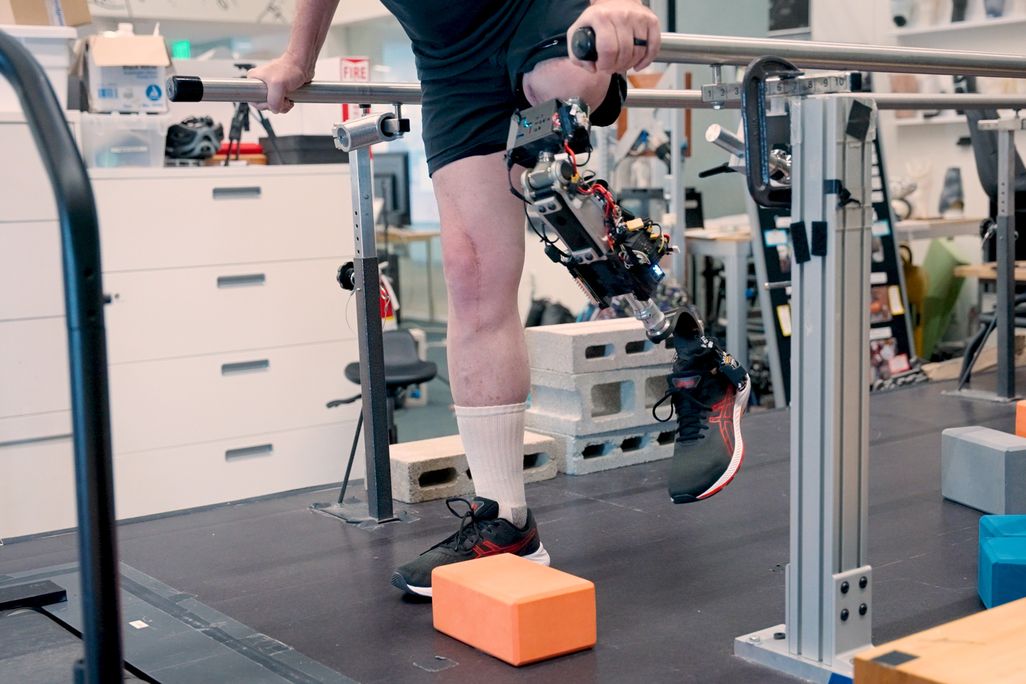
MIT’s AMI approach reconnects paired muscles in the residual limb so they can still send richer position feedback. In its 2024 report, MIT said seven people with the procedure walked faster, avoided obstacles, and climbed stairs more naturally than people with a traditional amputation.
That detail should change how U.S. families think about care. The prosthetic journey may begin in the operating room, not the device catalog. A surgeon, prosthetist, therapist, and rehab team may all shape how natural the final limb feels months later.
This is also why guide to assistive health technology content should not treat prosthetics like consumer gadgets. A phone gets upgraded after purchase. A nerve-linked limb depends on surgical history, muscle quality, skin health, training time, insurance, and follow-up care.
The brain needs feedback, not only commands
People love the phrase “mind-controlled arm.” It sounds clean. Brain thinks, arm moves. Real movement is messier. Your brain sends commands, but it also receives updates the whole time. Without updates, movement becomes a slow guessing game.
Cleveland Clinic’s work showed that adding touch and movement sensation helped participants behave more like people without limb loss during daily tasks. The researchers also noted that users did not have to watch the prosthesis as much when feedback was active.
That is a big deal. Watching a hand all day drains attention. It makes cooking, driving preparation, child care, and work tasks feel heavier than they look from the outside. Better feedback gives the user back some mental space.
The counterintuitive lesson is that control can improve when the device stops asking the user to control everything. A good system handles part of the burden through the body’s own loops. The person does less conscious babysitting.
What This Means for Amputees in the United States
For American readers, the science is only half the story. The other half is access. A person in Boston near a major research hospital may hear about one path. A veteran in rural Kansas, a diabetic amputee in Mississippi, or a worker injured in Texas may face a different world of referrals, coverage rules, travel, and repair delays.
Lab success still has to survive normal life
A lab can measure stair climbing, grip force, gait speed, and task accuracy. Those are useful tests. Life adds harder ones. The socket rubs after a hot afternoon. The charging routine gets forgotten. A child grabs the hand. A restaurant chair blocks the knee. Rain hits the parking lot.
That is where prosthetic limb control becomes personal. The best device for a user may not be the most advanced one. It may be the one they can wear for ten hours, repair within driving distance, and trust when they are tired.
Neural prosthetics also ask for training. The user may need to relearn how to send clear signals. Therapists may need to tune the system. Clinicians may need to update settings as the residual limb changes. None of that is glamorous, but it decides whether the limb gets worn or left in a closet.
One hard example comes from upper-limb loss. A person may love a multi-grip hand during a demo, then stop using it because it is heavy, slow, or awkward for dirty jobs. A carpenter, nurse, parent, and office worker do not need the same solution. Good care starts there.
Insurance, surgery, and repair create the real bottleneck
The U.S. prosthetics market is not one smooth road. Coverage can depend on medical need, documentation, state rules, Medicare policy, private insurance terms, and proof that the user can benefit from the device. Nerve-linked systems add another layer because they may involve surgery, trial participation, and specialist teams.
That does not make the work less meaningful. It makes honest expectations more valuable. A family reading about a direct nervous system link should ask: Is it approved for routine care? Is it part of a study? Who handles repair? What happens if the user moves states? How many visits are needed?
Sensory feedback prosthetics may also raise new rehab questions. If a user starts feeling pressure, movement, or vibration through redirected nerves, the brain has to map those signals. That learning can be powerful, but it is not magic.
The quiet insight is this: adoption may depend less on the headline device and more on the boring service chain around it. Scheduling, fitting, cleaning, software support, and reimbursement may decide the winner. Not the demo video.
Where the Technology Goes Next
The future path is not one single invention. It is a stack of smaller fixes: better nerve interfaces, lighter motors, safer implants, smarter control software, tougher covers, cleaner feedback, and care teams trained to fit the whole system. The next phase will reward designs that respect the body as much as the hardware.
The best systems will blend surgery, sensors, and training
MIT’s AMI research shows one direction: preserve or rebuild the body’s own feedback paths so the prosthesis can act less like a robot with instructions and more like a limb with a nervous system partner. MIT also reported that around 60 people worldwide had received the AMI procedure by mid-2024, including people with arm amputations.
Johns Hopkins APL shows another direction: build highly capable robotic limbs and neural interfaces that can support both movement and sensation. Cleveland Clinic adds a third lesson: touch, movement sense, and motor intent work best when tested together, not as isolated features.
For users, that means the winning prosthesis may not come from one company or one lab. It may come from a care model. The surgeon protects signal pathways. The device reads them. The therapist trains them. The user shapes the final skill through daily practice.
A useful comparison is hearing aids. The hardware matters, but fitting and adjustment matter too. Poor tuning can ruin a good device. Prosthetics tied to nerves will likely follow the same pattern, only with higher stakes.
Neural prosthetics need trust before mass adoption
Trust is not built by saying the limb is advanced. It is built when the user can walk across a wet driveway, hold a coffee mug, carry groceries, or pick up a child without thinking about the machine first. That is the level that matters.
Researchers also have to prove durability. Implanted electrodes, skin interfaces, bone anchoring, and muscle connections must survive years of motion, sweat, scar changes, infection risk, and daily wear. A device that shines for six months but fails at year three will not feel like freedom.
This is why wearable device trends for patients should be separated from medical reality. A smartwatch can annoy you and still be fine. A limb has to earn confidence under pressure.
The next surprise may be that ordinary appearance becomes less central. Some users will want a lifelike cover. Others may choose a visible mechanical design if it performs better, cools better, or repairs faster. Identity matters. So does function. The field should leave room for both.
Conclusion
The most honest way to view this field is with hope and patience at the same time. Researchers are no longer only building stronger artificial limbs. They are trying to rebuild the conversation between body and machine, which is a much harder task. Bionic Limb Technology sits at that crossing point, where surgery, nerve science, robotics, therapy, and daily life all have to agree. The best news is that the science is becoming more practical: people are walking with richer feedback, controlling arms with nerve intent, and testing touch in ways that match real tasks. The caution is plain too. Small studies, specialist access, insurance gaps, and long-term durability still stand between a research win and normal care. For U.S. patients, the right move is to ask careful questions, follow clinical evidence, and work with teams that treat the person before the machine. The future limb should not demand that you adapt your whole life around it. It should meet you halfway.
Frequently Asked Questions
How do bionic limbs connect to the nervous system?
They connect through methods such as redirected nerves, muscle interfaces, implanted electrodes, or surgical muscle pair repairs. The goal is to read movement intent from the body and, in some systems, send touch or position signals back to the user.
Are nerve-connected prosthetics available for normal patients yet?
Some related surgical and prosthetic methods are used in specialist care, but many direct nerve-linked systems remain in studies or limited clinical programs. Availability depends on limb type, health history, location, insurance, and access to trained teams.
What is the biggest benefit of sensory feedback in prosthetics?
It reduces guesswork. When a user can sense pressure, movement, or contact, they may not need to watch the device as closely. That can make daily tasks feel safer, faster, and less mentally tiring.
Do neural prosthetics work better than myoelectric arms?
They can offer more natural control in certain cases, but “better” depends on the user. A simpler myoelectric arm may fit one person’s job and budget, while a nerve-linked system may suit another person with the right surgical history and rehab support.
Can a prosthetic leg be controlled by the brain?
Yes, newer systems can use the body’s nervous system and muscle feedback to guide walking more naturally. The brain is not acting alone, though. It works through nerves, muscles, sensors, motors, and training.
How long does it take to learn a nerve-linked prosthesis?
Training time varies. Some users may learn basic control in sessions, while daily confidence can take weeks or months. The process depends on the surgery, device type, signal quality, therapy plan, and how often the person practices.
What questions should I ask before choosing an advanced prosthetic?
Ask whether it is approved for your situation, who will fit and repair it, how many visits it needs, what insurance covers, and what happens if parts fail. Also ask to speak with users who live with similar devices.
Will future prosthetic limbs feel like real limbs?
Some users may gain a stronger sense of ownership, touch, or movement, but a perfect natural limb feel is not guaranteed. The likely future is steady improvement: better feedback, cleaner control, lighter hardware, and care that fits real life.